
The Veterinary Technology Blog
The VetTechColleges.com staff publishes information related to vet tech education and certification, going “behind the scenes” to give you deeper insight into your educational options. You’ll find detailed descriptions of potential career paths, internship opportunities, emerging veterinary technologies, and profiles of leading professors and institutions in the space.

If you recently graduated or are close to completing a veterinary technology program, congratulations! The majority of the hard work is behind you, but there is one final hurdle to jump before you can start your career as a licensed, certified, or registered veterinary technician: the Veterinary Technician National Exam (VTNE).

Most state regulatory boards accept RACE-approved and CVTEA-accredited continuing education credits. However, continuing education acceptance is not standardized. States reserve the right to refuse credits from certain classes or providers. Students are advised to confirm that their state will accept credits before registering for any program.

Accredited vet tech programs that prepare students to get their vet tech licenses are available both online and all over the United States. However, it’s often the case that prospective vet techs want to find something close to home - or something in a specific and exciting new region. Northern California is home to San Francisco, the Muir Woods, Yosemite, hundreds of miles of oceanic coastlines, and more. For those wishing to experience all that Northern California has to offer while training to enter the veterinary field as a tech,...

Giving pets as holiday gifts can seem heartwarming, but it carries substantial responsibilities that potential pet owners should consider. Traditional media has portrayed pets as gifts as a heartwarming and magical experience. While gifting a pet can sometimes play out like the movies, it is more complicated than popping a bow on a kitten. There are many considerations to take into account.

If you are planning to fly with your pet, checking the airline's pet policies is essential. Each airline has its own set of rules and regulations for traveling with animals. Some airlines allow small pets in the cabin, while others require them to travel in cargo.

Massage therapy is widely recognized for its therapeutic benefits in humans, promoting relaxation, relieving stress, and alleviating muscle tension. These same advantages can be extended to our beloved pets, as they, too, experience physical and emotional strain in their daily lives. By incorporating massage into your pet care routine, you can enhance their well-being, foster a deeper bond, and improve their overall quality of life.

Increasing earnings as a veterinary technician often involves a combination of factors that can vary from individual to individual. “To start with, advocate for yourself and diversify your skill set,” advises Beauvais.
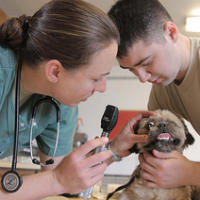
Students interested in becoming a veterinarian may want to complete pre-vet training while at the undergraduate level. Typically, this means completing a degree in a related science field, but a few schools even allow students to start their senior year of college as a freshman in a veterinary program. Many schools also have pre-vet clubs that can be helpful in meeting other students engaged in and interested in the field. Read on for more about the various pre-vet programs around the country.

Veterinarians have been using traditional 3D printing for some time to create custom prosthetics and orthopedic implants tailored to individual animals' unique anatomy, thereby enhancing surgical interventions' outcomes. 3D bioprinting takes this technology a step further by fabricating tissues and organs using living cells, which holds promise for regenerative therapies and personalized medicine in veterinary practice.

One major issue pet owners face is how to alleviate their pets' pain and discomfort due to age, injury, or illness. Dogs and cats are known to hide their pain, making it challenging for pet owners to identify when their pets need relief.

Despite the deep affection and well-meaning intentions most pet parents hold for their animals, it is not uncommon for them to inadvertently make mistakes that can affect their pet's health and well-being. These errors often stem from a lack of knowledge rather than a deficiency of care or love. Understanding the subtleties of pet healthcare, nutritional needs, and behavioral management can be complex. Without proper guidance, even the most devoted pet owner can find themselves unknowingly compromising their pet's quality of life.

In people, cannabis is known to alleviate chronic pain, reduce anxiety, and even aid in the management of conditions like epilepsy and multiple sclerosis. These benefits stem from cannabis's active compounds, such as cannabidiol (CBD) and tetrahydrocannabinol (THC), which interact with the body's endocannabinoid system. With such positive outcomes in human medicine, it's natural for pet owners and veterinary professionals to wonder if and how these therapeutic effects might translate to our four-legged companions.
Veterinary technicians are crucial in animal healthcare, providing essential care and support to our beloved pets and livestock. They are the backbone of any veterinary practice, performing various functions from conducting laboratory tests to assisting in surgeries. In the unique role of a traveling vet tech, these professionals take their skills on the road, providing vital services to areas where veterinary care is scant or nonexistent.

Like many other sectors, the field of veterinary medicine grapples with the challenge of ensuring diversity, equity, and inclusion. Historically, the veterinary profession has been predominantly white and male, and while other professions have made strides towards a more diverse workforce, this field has been lagging behind.

Veterinary technicians, often called vet techs, are crucial in providing compassionate animal care. They fulfill myriad responsibilities, including administering medication, assisting in surgeries, conducting laboratory tests, and offering routine healthcare advice to pet owners. To become a vet tech, students must complete a two-year associate degree in veterinary technology, although some pursue a four-year bachelor's degree.