
The Veterinary Technology Blog
The VetTechColleges.com staff publishes information related to vet tech education and certification, going “behind the scenes” to give you deeper insight into your educational options. You’ll find detailed descriptions of potential career paths, internship opportunities, emerging veterinary technologies, and profiles of leading professors and institutions in the space.

Increasing earnings as a veterinary technician often involves a combination of factors that can vary from individual to individual. “To start with, advocate for yourself and diversify your skill set,” advises Beauvais.

Pursuing a veterinary medicine or animal science career can be costly in today’s higher-learning environment. Luckily, there are many ways to help you cover the costs, whether pursuing a DVM or an undergraduate degree in veterinary technology. Scholarships are generally based on academic excellence and financial need, though many other criteria may apply, depending on the award. Browse our extensive list of options.

If you recently graduated or are close to completing a veterinary technology program, congratulations! The majority of the hard work is behind you, but there is one final hurdle to jump before you can start your career as a licensed, certified, or registered veterinary technician: the Veterinary Technician National Exam (VTNE).

Overpopulation is the main driver behind early spay-neuter programs which, over the past 30 years, have become routine throughout the United States. In fact, since the 1970s, the “ultra-early” neutering of puppies and kittens has been the custom in many veterinarian offices due to the abundance of feral and abandoned animals being euthanized in shelters.

According to the American Veterinary Medical Association (AVMA), “Cyberbullying is the use of electronic communication to bully someone, typically by sending or publicly posting messages that are intimidating or threatening.” This is beyond a simple bad review and is a serious issue in many veterinary facilities. In fact, 40 percent of AVMA members surveyed said they, or someone they work with, has been a victim of cyberbullying.

Often, it can feel possible to carry on a conversation with the furry members of the household. But is that what is really happening? Dr. Leslie Sinn, a veterinarian and animal behavior expert, says it’s a little more complicated than one might think.

Many veterinary potentials are intrigued by the care, biology, and future of animals like zebras, ocelots, and lemurs. And, while many colleges provide excellent veterinary courses that define and familiarize students with these creatures, only a small number of schools provide on-site zoo animal experience.

From treating stinky pet breath to filling cavities, veterinary dentists have a variety of responsibilities on the job. A residency in dentistry puts them on the path toward becoming board certified and preparing them to pass the exam to prove their vet dentistry skills.

The VPA is a newly created veterinary profession requiring a master's degree and registration with the Colorado State Board of Veterinary Medicine. VPAs practice under the supervision of a licensed veterinarian and are limited to companion animals, specifically cats and dogs. Rose says the scope is narrower than many people assume.

An animal behaviorist is a professional who studies and analyzes the behavior of animals, understanding why they behave in specific ways and providing solutions to improve their well-being. This role often involves diagnosing and treating behavioral issues, conducting research, or working with pet owners and veterinarians to implement behavior modification techniques.

Despite the rigorous training and the clear demand, the profession is losing people at an alarming rate. The average career length before a technician leaves the field is just five to seven years. The reasons are complicated, but they often trace back to the same root causes: feeling undervalued, underutilized, and underprepared for the job's emotional and mental demands.
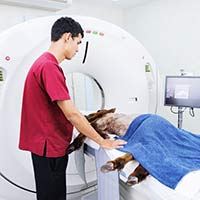
As the nurses of the animal medicine world, veterinary technicians are an essential part of the animal healthcare team. By taking on administrative, customer-facing, and routine clinical tasks, vet techs extend the capacity of a veterinarian to focus on diagnosis, surgery, and treatment planning. While many vet techs enjoy fulfilling careers working as generalists, some find that there is a specific arm of animal medicine in which they’re particularly interested and skilled. Vet techs who wish to follow their passion into a specialization will find that they can level up...
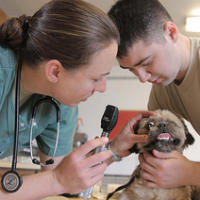
Along with being enrolled in an accredited veterinary technology program, it is equally important for veterinary assistants and technicians to have adequate hands-on experience with animals. Many internship and externship programs let students spend some time in specialized departments such as radiology, hematology, oncology, cardiology, and surgery.

Although the number of euthanized dogs has declined since 2011, due in part to an increase in pet adoption as well as an increase in the number of stray animals successfully returned to their owners, close to 335,000 dogs are still euthanized each year in US shelters.
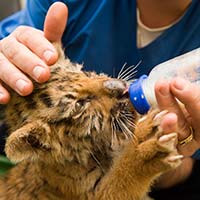
Learn about the daily responsibilities of the zoo veterinary technician, and about how to prepare to manage and help care for exotic, rare, and sometime dangerous animals.